Patterns in how layered incentive designs connect reel-based play with table interactions and event-based wagers through varied transaction channels on handheld systems
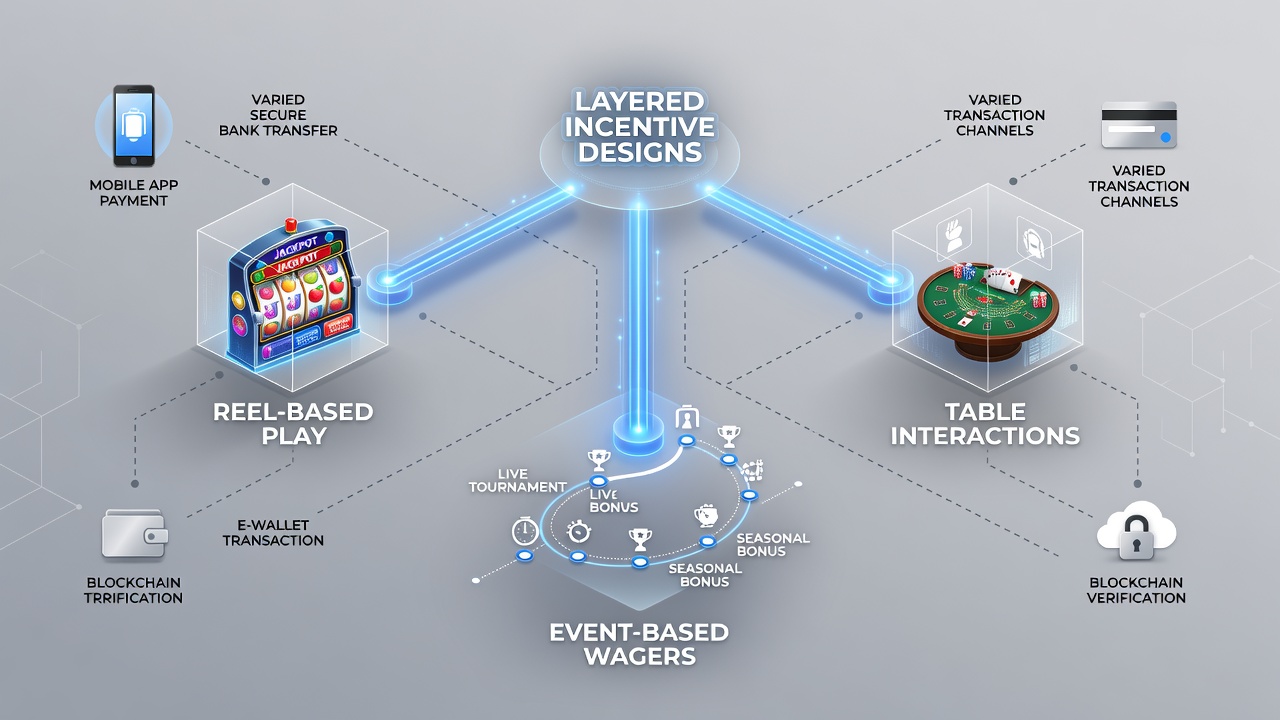
Layered incentive designs on handheld systems create pathways that link reel-based play directly to table interactions and event-based wagers through multiple transaction channels. These structures operate across mobile platforms where operators track player activity and route rewards through deposit methods, loyalty points, and bonus multipliers. Data from various markets shows consistent patterns where initial reel activity triggers credits that migrate to live table sessions or sports-style event markets without requiring separate account actions.
Core Mechanics of Incentive Layering
Reel-based play on mobile devices generates base rewards that feed into tiered systems, and these systems allow seamless transfers to table game environments. Operators design the layers so that a single deposit processed through a digital wallet can unlock both slot multipliers and table game rake credits simultaneously. Studies from industry reports indicate that players who complete reel sessions often receive prompts that redirect accumulated value into blackjack or roulette interfaces on the same device.
Transaction channels play a central role because they determine how quickly layered rewards activate. E-wallet transfers tend to bypass intermediate verification steps that traditional bank methods encounter, which accelerates movement from reel outcomes to table wagers. Event-based markets such as live sports predictions integrate through the same channels when operators embed odds feeds within the same application shell used for reels and tables.
Observed Connections Across Mobile Ecosystems
Patterns emerge when analysts examine how incentive flows behave in different regulatory environments. In several North American jurisdictions, mobile systems record higher migration rates from reel play to table interactions when event wagers are bundled into the same loyalty ladder. Researchers note that Australian operators have documented similar routing where digital currency deposits trigger cross-product bonuses that span slots, card tables, and racing markets within one session.
Handheld systems facilitate these connections through unified player profiles that update in real time. A deposit made via cryptocurrency clears faster than card payments in many cases, allowing rewards earned on reels to convert into table chips or event stake credits without delay. Figures from gaming data aggregators reveal that such accelerated channels correlate with increased session length across product types rather than isolated reel activity alone.

Role of Varied Payment Methods in Pattern Formation
Payment method selection influences how layered incentives distribute value. Prepaid card users encounter different bonus release schedules compared with direct bank transfers, which affects the timing of transitions from reel play to table sessions. Mobile operators adjust these schedules so that event-based wagers receive priority when certain channels process the original deposit, creating predictable migration sequences observed in player logs.
Those who study engagement metrics across portable devices find recurring sequences where reel wins feed table game participation before event markets activate. This sequence holds across multiple operators because the underlying loyalty algorithms prioritize cross-product movement once initial reel thresholds are met. Regulatory filings in Canadian provinces document these sequences without attributing causation, yet the patterns remain consistent in quarterly activity summaries.
Jurisdictional Variations and Data Trends
European markets outside the United Kingdom display distinct layering preferences where event wagers receive heavier weighting in mobile incentive structures than table interactions. Data compiled by regional gaming associations shows that reel-to-event pathways outpace reel-to-table routes when operators use instant settlement options through local payment apps. In contrast, certain U.S. state systems maintain balanced distribution across all three categories when standardized banking rails process the transactions.
Industry research from the University of Nevada Reno gaming laboratory has tracked how these patterns shift during periods of regulatory change. The laboratory's reports cover multiple years of mobile transaction data and highlight stable connections between reel activity and subsequent table or event engagement regardless of minor rule adjustments. Observers note that handheld systems maintain these flows even as new payment technologies enter the market.
Integration with Broader Player Advancement Structures
Layered incentives also intersect with status advancement programs that span reel, table, and event categories on a single mobile account. Points earned through reel spins contribute to table rake rebates and event wager cashback within unified progression tiers. Transaction channel choice can accelerate or delay tier advancement depending on processing speed and associated fee structures.
Analysts reviewing mobile platform logs identify clear clusters where players who favor rapid e-wallet deposits move through incentive layers faster than those using slower methods. These clusters appear consistently across different device operating systems and geographic regions, suggesting the patterns stem from system design rather than isolated user behavior.
Conclusion
Patterns in layered incentive designs demonstrate reliable connections between reel-based play, table interactions, and event-based wagers when examined through the lens of transaction channels on handheld systems. Regulatory data and platform metrics continue to document these flows across multiple jurisdictions, with payment method selection acting as a primary modulator of reward migration speed and sequence. As mobile gaming infrastructure evolves, these established patterns provide a baseline for understanding how operators route value across product categories without requiring separate player actions.