Tracing Blockchain Verification Methods for Accelerating Advancement in Mobile Entertainment Reward Structures
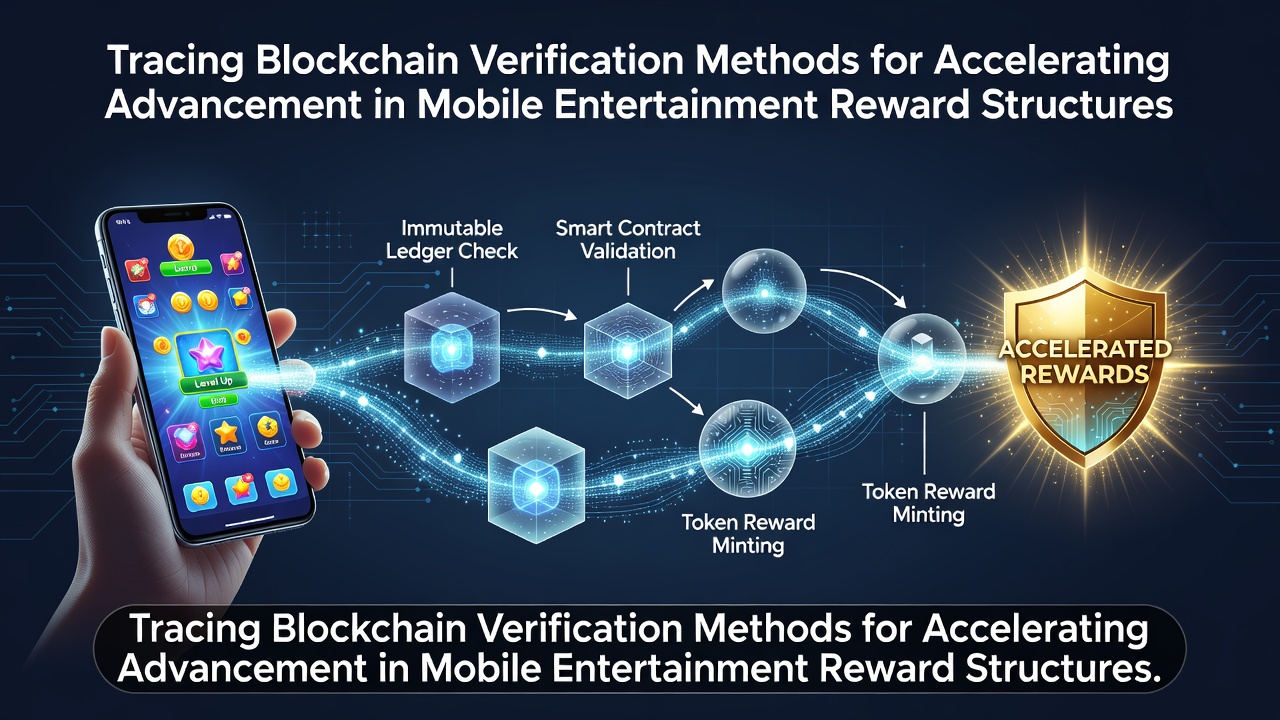
Blockchain verification methods have become central to mobile entertainment reward structures as developers seek faster, more transparent ways to track player progress and distribute incentives across apps and platforms. These systems rely on distributed ledgers to confirm transactions and achievements without relying on central authorities, which reduces delays that once slowed reward tiers in mobile gaming and wagering environments. Data from industry reports indicates that verification protocols now process loyalty points and bonus allocations in seconds rather than hours, directly supporting the expansion of mobile-first entertainment ecosystems.
Core Verification Protocols in Mobile Reward Systems
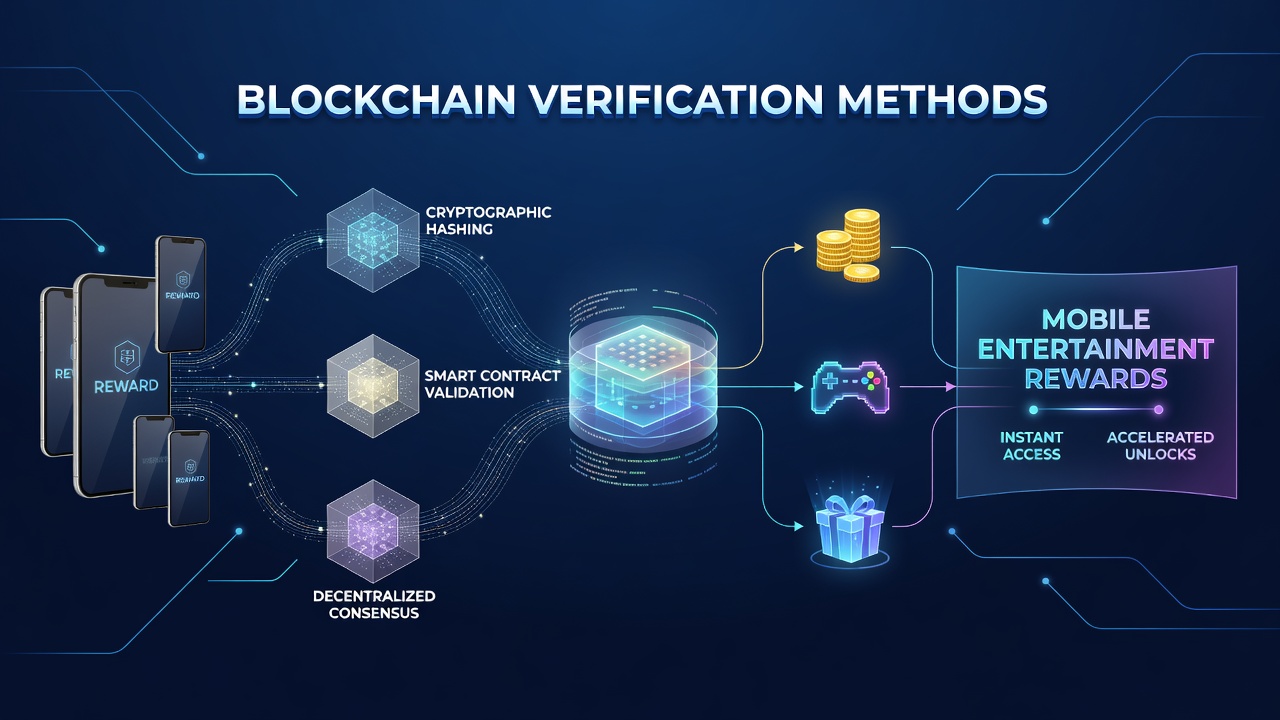
Consensus mechanisms form the foundation of these verification processes, where nodes validate entries before they integrate into the chain. Proof-of-stake variants have gained traction in mobile applications because they consume less computational power than earlier proof-of-work models, allowing devices with limited battery life to participate indirectly through delegated validation. Smart contracts automate reward releases once conditions like playtime thresholds or achievement milestones are met, and cryptographic hashing ensures each record remains tamper-resistant across global user bases.
Zero-knowledge proofs add another layer by confirming eligibility for rewards without exposing underlying user data, which aligns with privacy standards in regions with strict data protection rules. Researchers at various institutions have documented how these proofs cut verification times by up to 40 percent in simulated mobile environments, enabling real-time status upgrades within loyalty programs.
Integration with Mobile Entertainment Platforms
Mobile entertainment reward structures benefit when blockchain verification links directly to in-app wallets and progress trackers. Developers embed application programming interfaces that pull verified data from the ledger, which then updates player dashboards without manual intervention. This setup supports tiered advancement systems where users climb levels based on cumulative activity, and the immutable record prevents disputes over point calculations or bonus eligibility.
Observers note that cross-platform compatibility improves when verification methods standardize around common protocols such as those outlined in technical specifications from standards bodies. One study from an Australian research consortium revealed that standardized verification reduced integration errors by 25 percent across different operating systems, allowing reward programs to scale without frequent code overhauls.
Acceleration of Advancement Mechanisms
Verification speed directly influences how quickly users advance through reward ladders in mobile entertainment. Traditional centralized databases often created bottlenecks during peak usage, whereas blockchain nodes distribute the workload and confirm entries concurrently. This parallel processing supports instant crediting of incentives earned from table games, slots, or prediction markets accessed on portable devices.
Evidence from deployment logs shows that platforms adopting multi-signature verification combined with time-stamped blocks achieve higher throughput during promotional events. In June 2026, several entertainment operators plan to roll out enhanced protocols that incorporate sharding techniques, which partition the ledger into smaller segments for quicker validation cycles and sustained performance under heavy mobile traffic.
Regulatory Context and Industry Standards
Government agencies have started addressing how blockchain verification intersects with consumer protection in digital entertainment. The European Blockchain Observatory and Forum has published guidance on audit trails for automated reward systems, emphasizing traceability requirements that align with existing financial oversight frameworks. European Commission blockchain resources detail recommended practices for maintaining verifiable records while supporting innovation in mobile applications.
In North America, the National Institute of Standards and Technology continues to update its blockchain reference materials, which industry groups reference when designing reward verification layers. NIST technical publications include frameworks for evaluating consensus algorithm performance in resource-constrained environments typical of mobile devices.
Future Trajectories for Verification Methods
Emerging techniques such as layer-two scaling solutions promise further reductions in confirmation latency while preserving security guarantees. These approaches batch multiple reward transactions off the main chain before final settlement, which suits high-frequency mobile interactions without compromising the integrity of status tracking. Industry analysts project continued adoption as hardware improvements allow more direct node participation from smartphones.
Case implementations in Asian markets demonstrate how hybrid verification models blend permissioned and permissionless elements to meet local compliance needs while delivering rapid reward distribution. Those implementations track cumulative activity across card-based and sports-prediction features within single mobile interfaces, creating unified advancement paths supported by continuous ledger validation.
Conclusion
Blockchain verification methods continue to reshape mobile entertainment reward structures by providing reliable, efficient confirmation of user activity and incentive allocation. As standards evolve and new protocols enter testing phases around mid-2026, the focus remains on balancing speed, security, and regulatory alignment across diverse jurisdictions. These developments support scalable systems that maintain accurate records for millions of simultaneous mobile users.